
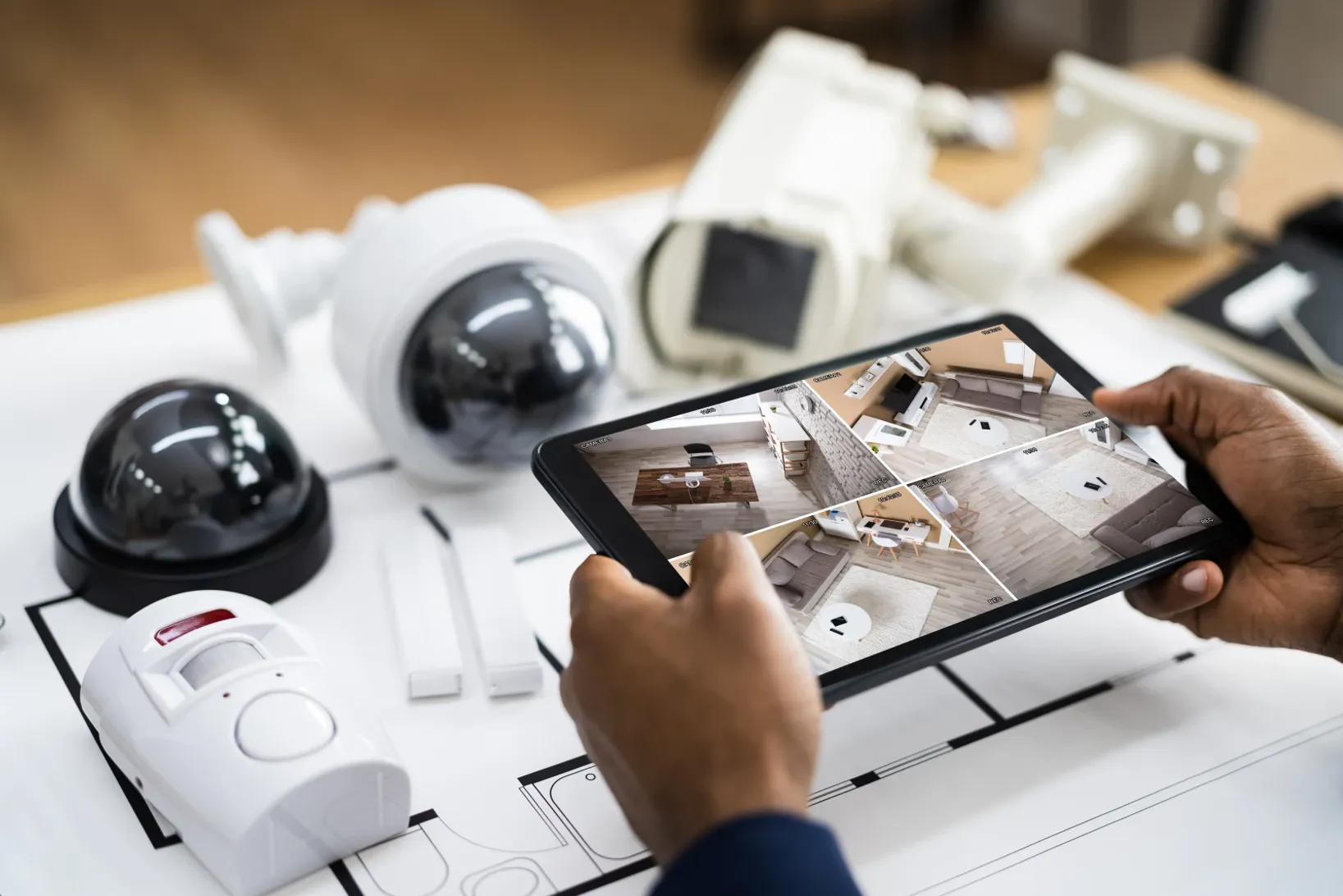
Security requirements have evolved significantly over the past decade. Traditional surveillance systems, which were once based mainly on standalone CCTV cameras and local recording devices, are no longer sufficient for the speed, complexity, and scale of modern environments. Today, integrated security systems are becoming the standard because they combine surveillance, access control, analytics, and network connectivity into a unified and intelligent platform.
Traditional surveillance typically operates in isolation. Cameras record footage and store it on DVR or NVR systems, and monitoring is mostly manual. While this approach provides basic recording capability, it has clear limitations. It is reactive rather than proactive, meaning incidents are usually reviewed after they occur rather than prevented in real time. It also requires operators to switch between different systems, which reduces efficiency and increases the chance of missing critical events.
Integrated security systems solve these limitations by connecting all security components into a single ecosystem. CCTV cameras, access control systems, alarms, and IoT-based sensors all work together through a centralized platform. This allows security teams to monitor, control, and respond to events from one interface, significantly improving situational awareness and operational efficiency.
One of the main reasons integrated systems are replacing traditional surveillance is centralized management. Instead of dealing with separate devices and software, users can control the entire security infrastructure from one dashboard. This reduces complexity and enables faster response times when incidents occur.
Another major advantage is real-time alerts and automation. Integrated systems can analyze incoming data instantly and trigger alerts when unusual activity is detected. For example, unauthorized access attempts, motion in restricted zones, or abnormal behavior patterns can automatically generate notifications or activate alarms. This transforms security from passive monitoring into active prevention.
Remote access is also a key factor driving adoption. Modern integrated systems are often connected through IP networks and cloud platforms, allowing users to monitor live video feeds and security status from anywhere using mobile devices or computers. This level of flexibility is not possible with traditional standalone systems, which are usually limited to on-site monitoring.
In addition, integrated systems often include advanced analytics and artificial intelligence features. These can support facial recognition, object detection, and behavior analysis, helping organizations identify potential risks more quickly and accurately. Instead of simply recording footage, the system becomes capable of interpreting what is happening in real time.
Scalability is another important advantage. As organizations grow, integrated systems can easily expand by adding new cameras, sensors, or access points without redesigning the entire infrastructure. This makes them suitable for small businesses as well as large-scale industrial or urban environments.
Modern security systems also depend heavily on reliable network infrastructure. High-speed networks, including fiber optic connections, ensure stable video transmission, low latency, and uninterrupted communication between devices. Without a strong network foundation, even advanced security systems cannot perform effectively.
Businesses are increasingly adopting integrated security solutions because they offer improved safety, faster decision-making, reduced operational costs, and future-ready infrastructure. In sectors such as corporate buildings, data centers, retail environments, and industrial facilities, security is no longer just about recording events—it is about preventing them and responding intelligently.
As technology continues to develop, integrated security systems are expected to become even more advanced, combining deeper AI capabilities with stronger connectivity and broader automation. This shift marks a clear transition from traditional surveillance to intelligent, network-driven security ecosystems.