
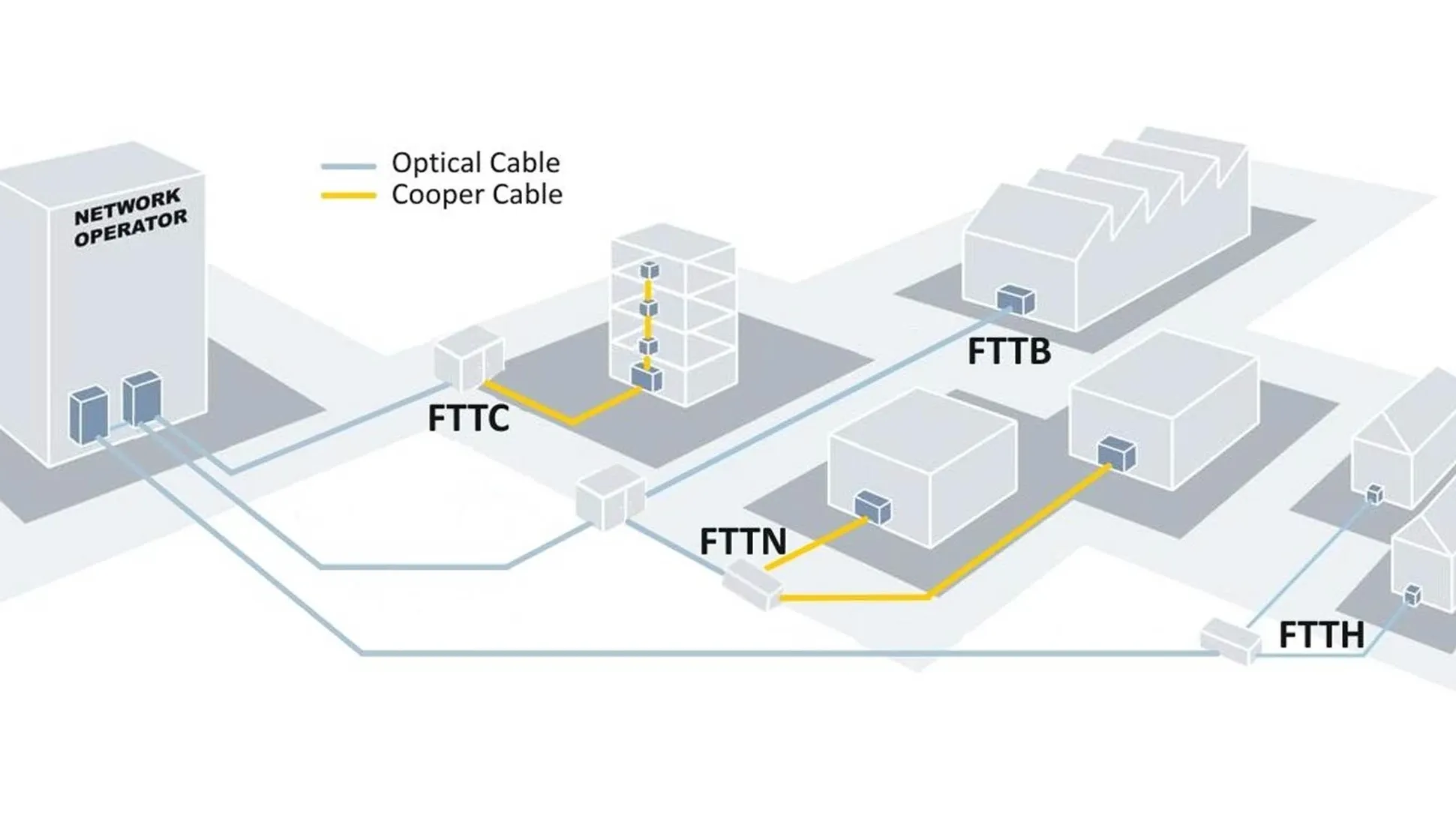
Fiber-optic connectivity is transforming how we experience the internet, offering unprecedented speed, reliability, and capacity. Among the most common deployment models are Fiber to the Home (FTTH) and Fiber to the Building (FTTB), each designed to bring fiber closer to end users, but in different ways.
FTTH delivers a dedicated fiber connection directly to individual residences, providing maximum bandwidth and the ability to support multiple high-demand applications simultaneously. This model ensures that each household enjoys consistent, ultra-fast speeds, making it ideal for streaming, gaming, remote work, and smart home devices. On the other hand, FTTB brings fiber to a shared building, such as an apartment complex or office block, where the connection is then distributed to individual units using existing copper or Ethernet wiring.
While this approach can reduce deployment costs and simplify installation in multi-unit buildings, bandwidth may be shared among tenants, potentially leading to slower speeds during peak usage periods. When choosing between FTTH and FTTB, network operators must consider factors such as building density, cost, ease of deployment, and expected demand. FTTH generally requires more extensive construction work but provides long-term scalability and superior performance. FTTB can be faster to implement and more cost-effective in dense urban environments but may require future upgrades to meet increasing bandwidth needs.
Both models have proven successful in delivering fiber connectivity, and the choice often depends on balancing cost, performance, and deployment logistics. As internet demand continues to rise with streaming, cloud services, and IoT devices, understanding the pros, cons, and considerations of FTTH versus FTTB is essential for service providers, building developers, and residents seeking reliable, high-speed internet.